Source Blood Test Hematology Analyzer for Labs, Clinics, and Hospitals
Explore 30 verified blood test hematology analyzer options for clinical diagnostics. Compare specifications like throughput, sample volume, and storage capacity from Chinese manufacturers to find the right equipment for your facility; compare the available evidence and request quotations based on your requirements.
Key considerations
Products List


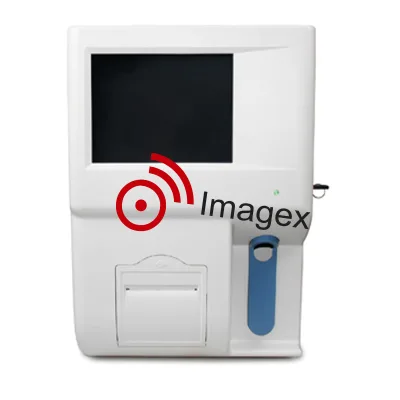
3 Part Hematology Analyzer Hematology Analyzer Blood Hemogram Hematology Analyzer
$1100.00 - $2600.00
Moq: 1




Comprehensive Sourcing Guide
Blood Test Hematology Analyzer Sourcing Guide
Buyers must first distinguish between the diverse product categories observed in the current market, ranging from biological diagnostics to imaging equipment. The available listings include specific models like the SY-BH192 and MSLAB10, which are explicitly classified as hematology or biochemistry analyzers. Understanding these distinct classifications is critical because a unit designed for urine analysis or general imaging will not meet the specific requirements for whole blood or capillary blood testing.
Procurement teams should verify that the selected device matches the intended clinical workflow, as the observed data shows variations in sample types and throughput capabilities. Some units support manual sampling with a pierce method, while others offer automatic operation with high sample volumes. Confirming the exact classification ensures the instrument can handle the required parameters, such as the 28 parameters plus histograms observed in specific listings, without requiring incompatible reagents or interfaces.
Product Scope and Observed Listing Signals
The market presents a wide price spectrum, with observed listings ranging from 239 to 15,000 USD, reflecting significant differences in automation levels and feature sets. Buyers should analyze whether the lower-cost options provide the necessary storage capacity for up to 50,000 results or if the higher price points correlate with advanced interfaces like multilanguage support and USB connectivity. This price variance often indicates a trade-off between basic functionality and comprehensive data management features required for busy laboratories.
Physical dimensions and weight are also key signals that influence facility planning and installation logistics. Observed specifications include weights ranging from 25kg to 28kg and dimensions varying from compact 34cm units to larger 405mm wide systems. Procurement officers must ensure the selected analyzer fits the designated laboratory space while accounting for the required power supply of 100-240V and environmental conditions like humidity levels between 30-85%.
Technical Specifications to Verify
Verification of throughput and sample volume is essential for matching equipment to daily patient load expectations. The observed data indicates a standard throughput of 60 samples per hour for several models, which serves as a baseline for efficiency planning. Buyers must confirm if the specific unit can handle the minimum sample volume of 9 microliters or the larger 50 microliters required for whole blood, as these constraints directly impact the feasibility of using capillary blood samples in pediatric or emergency settings.
Data storage and reagent compatibility are equally critical technical factors that determine long-term operational viability. Listings show storage capacities ranging from 5,000 to 50,000 reports, necessitating a review of the institution's data retention policies. Additionally, the specific reagent requirements, including diluent, detergent, and various lysing agents, must be confirmed to ensure a stable supply chain and to verify that the cell dying process remains stable and harmonious for accurate results.
Compliance and Safety Documentation
Regulatory compliance is a non-negotiable aspect of sourcing medical diagnostic equipment, with observed certifications including CE, ISOCE, and FDA approvals. Buyers must rigorously verify that the specific model they intend to purchase holds the necessary certifications for their local market, as the presence of one certification does not guarantee the validity of another for all jurisdictions. The listing of ISO9001:2008 and ISO13485 standards further indicates a commitment to quality management systems that should be validated against current regulatory requirements.
Safety documentation, such as MSDS, provides vital information regarding the handling of hazardous materials and reagents used in the testing process. Procurement teams should request the Material Safety Data Sheet to understand the chemical composition of the reagents and the safety protocols required for storage and disposal. Ensuring that the supplier provides complete safety documentation protects the laboratory from regulatory penalties and ensures the safety of the medical staff operating the equipment daily.
Cost Drivers and Commercial Terms
The total cost of ownership extends beyond the initial purchase price, encompassing reagent costs, maintenance, and potential customization fees. While the observed MOQ is consistently 1 unit, buyers should negotiate terms regarding the availability of customized options and the cost implications of optional features like bar code scanning. Understanding the full commercial package helps in budgeting for the recurring expenses associated with running the analyzer, such as the specific diluent and lyse solutions required for operation.
Packaging and shipping standards also influence the final landed cost and the condition of the equipment upon arrival. The observed packing methods range from standard cartons to standard export packaging, which must be robust enough to protect the 25kg to 28kg units during transit from China. Buyers should clarify who bears the risk during shipping and ensure that the packaging meets the necessary standards to prevent damage to sensitive optical or mechanical components during the journey.
Supplier Qualification and Quality Control
Supplier qualification requires a thorough review of the manufacturer's origin and their adherence to international quality standards. The observed products originate from China, and buyers should verify the supplier's track record in meeting the ISO13485 and ISO9001 standards cited in the product specifications. It is crucial to confirm that the supplier has a proven history of delivering equipment that maintains the specified weight and dimensional tolerances consistently across different production batches.
Quality control processes should be validated through the supplier's ability to provide detailed test results and performance data. Buyers must ensure that the supplier can demonstrate the stability of the cell dying process and the accuracy of the 28 parameters plus histograms output. Establishing a clear quality assurance protocol with the supplier, including pre-shipment inspections and post-delivery support, is essential to mitigate the risks associated with importing complex medical diagnostic devices.
Long-Term Procurement Checks
Sustained procurement success depends on verifying the long-term availability of reagents and the durability of the equipment's performance. Buyers should assess the supplier's commitment to maintaining a steady supply of the specific reagents, such as Baso-Lyse and Eo-Lyse, which are critical for the analyzer's operation. Ensuring that the reagent supply chain is resilient prevents operational downtime and maintains the consistency of test results over the lifespan of the instrument.
Future-proofing the investment involves checking the compatibility of the interface and software with evolving laboratory information systems. The observed interfaces, including USB, PS/2, and COM ports, must be compatible with the institution's existing IT infrastructure to ensure seamless data transfer. Buyers should also verify the availability of software updates and the supplier's capacity to provide technical support for the multilanguage interface, ensuring the system remains user-friendly and compliant with future regulatory changes.
FAQs
What certifications do these hematology analyzers hold?
These analyzers hold CE, ISO, and MSDS certifications. Some models also feature FDA and SGS approvals. These credentials ensure compliance with international safety and quality standards for medical diagnostic equipment used in clinical settings.
What is the throughput capacity of the analyzer?
The device processes up to 60 samples per hour. This throughput supports efficient workflow in busy laboratories. It balances speed with accuracy, ensuring timely results for routine hematology tests without compromising data integrity or operational stability.
Can the analyzer handle customized requirements?
Yes, customization is available for specific operational needs. Buyers can request tailored features such as barcode scanning options or specific interface configurations. This flexibility allows laboratories to integrate the equipment seamlessly into their existing diagnostic workflows and systems.
What is the minimum sample volume required?
The minimum sample volume is 9 microliters for whole blood. This low volume requirement reduces patient discomfort and reagent consumption. It enables efficient testing even when sample availability is limited, making it suitable for pediatric or frequent testing scenarios.
How many results can the device store?
The system stores up to 50,000 results. This ample capacity ensures long-term data retention for patient history and quality control. It reduces the need for frequent data exports, supporting continuous monitoring and efficient record-keeping in clinical environments.
What are the physical dimensions of the unit?
Dimensions vary by model, typically ranging from 34cm to 55cm in width. Standard export packing ensures safe transport. These compact designs fit well in standard laboratory spaces, allowing for flexible placement while maintaining accessibility for maintenance and operation.